
Article: How To Start an Upward Spiral
How To Start an Upward Spiral
Summary:
Feeling stuck in negativity, dreading work, struggling alone or unsure where to start? It’s often not a lack of willpower but a stress response (fight, flight, freeze or fawn) that puts the brain on high alert. This post walks through five small steps: notice it, change your language, give yourself permission to regulate, learn your regulators, and choose one small action. It also looks at how stress can quietly reduce appetite and healthy eating, and how nourishing your brain can be the first domino towards energy, motivation and agency. Is it time to let go, make space and choose a new direction?

Many people start to struggle with the shorter days of autumn and life can feel like it is spiralling downward. A powerless sinking into darker days.
Perhaps you’re stuck in negativity with the same thoughts circling no matter how hard you try to think your way out. Perhaps you’re not opening up to anyone because you don’t want to be a burden, or you don’t know where to begin, and the pressure feels like it keeps building. You wake up already dreading work, or you’re in a relationship that doesn’t feel right and you can’t see a way out.
You want things to be different, you want to stop the feeling of a downward spiral, but you don’t know where to start. The thought of fixing everything is so big that you end up doing nothing, and the hopelessness quietly gets a little deeper.
If this sounds like you, I want you to know that this is far more common than people admit, and it doesn’t mean something is wrong with you. Feeling stuck is a very human response to carrying too much for too long.
Here’s the hopeful part. You don’t have to fix everything to begin to change things. A downward spiral only needs one thing to change direction.
This important moment is about finding that first small turn, and then how to make the next one a little easier.
Why you feel stuck: it’s a stress response
Here’s something I wish more people knew. Feeling stuck isn’t a personality flaw, a lack of willpower or proof that you’re doing life wrong. Very often, it’s a stress response.
You’ve probably heard of fight and flight. There are two more: freeze and fawn.
-
Fight shows up as irritability, snapping, or constant tension.
-
Flight looks like staying busy, avoiding, or wanting to run away.
-
Freeze is feeling stuck, numb, foggy, or unable to start anything.
-
Fawn is people-pleasing, keeping the peace, and saying yes when you mean no.
They’re all your nervous system’s way of protecting you when it senses threat. The trouble is that when stress goes on for a long time (a draining job, a relationship that isn’t right, carrying everything alone), the system gets stuck in “threat” mode.
And in threat mode, the brain changes how it works. It becomes hypervigilant, scanning for what could go wrong. It develops a negativity bias, so the bad stands out and the good slides past. It perceives threat even where there isn’t any. Of course you feel stuck. Your brain is busy keeping you safe, not helping you plan.
The way out isn’t to push harder. It’s to help your system feel safe enough to move again.
The thing is, we usually only act once we've hit the bottom. That's the reactive way: wait until we feel awful, then scramble to feel better.
The alternative: interrupt it, jump off, choose
You don't have to ride the spiral to the bottom. You can notice it, interrupt it, and consciously jump off.

The path from stuck to moving
1. Notice it.
Start by simply noticing: “This is a stress response.” Not “I’m lazy”, not “I’m broken”, just “my nervous system is in protection mode.” Naming it takes some of its power away. Ask yourself, Is this fight, flight, freeze or fawn?
2. Change your language.
Reframe the story you’re telling. “I’m stuck” becomes “I’m stuck right now, and my body is trying to protect me.” Rename the feeling, the situation, and your part in it, in kinder and more open words.
3. Give yourself permission to regulate.
This one is bigger than it sounds. Many of us treat rest, calming down and looking after ourselves as a luxury, or something we can only do once everything else is finished. It isn’t. Regulating is what makes everything else possible. You’re allowed to pause, breathe, and take care of your system before you’ve sorted anything out.
4. Know your regulators.
Your regulators are the things that help you feel safe and settled. They’re different for everyone, so it’s worth working out yours. For some it’s a slow exhale or walking outside. For others it’s music, warmth, a hot drink, tidying a small space, time with an animal, or a friend who simply listens. Try this: write down three things that reliably help you feel even slightly calmer. That’s your toolkit. And this is where “live where your feet are” comes in: feeling your feet on the ground is one of the quickest regulators there is.
5. Then choose one small action.
Once your system feels a little safer, it can think again. Now ask: “What’s one small thing I could do?” Send the text, take the walk, eat the proper meal, put one thing in the diary. It will feel easier because you’re no longer trying to act while your body is shouting “danger”.
That’s the start of your upward spiral: notice, reframe, regulate, act, and repeat.
Feeding the brain that’s trying to keep you safe
Here’s something that often gets missed. One of the ways your brain decides whether it’s safe is by checking whether it has what it needs. A body that’s under-fuelled and running on empty reads as “not safe”, and a brain that isn’t getting a reliable supply of nutrients has less to work with when it comes to feeling steady, thinking clearly and coping.
And this is exactly where stress gets in the way.
When we’re stressed, appetite often drops. Meals get skipped, or we eat whatever takes the least effort: toast, biscuits, another coffee. Healthy eating is frequently the first thing to go, and it happens quietly.
We don’t decide to stop looking after ourselves. We’re just too depleted to cook, shop or even think about food.
That sets up a loop. Stress reduces nourishment, less nourishment means less energy and motivation, and less energy and motivation make it harder to do the very things that would help. It’s another way the spiral turns down.
Breaking the loop with the smallest possible step
When the effort of a proper meal feels like too much, you don’t have to start there. You can start smaller.
This is where a brain supplement can be a helpful first domino. It won’t fix anything on its own, and it doesn’t replace food. But it’s one easy, doable action, taken in a moment, that tops up the nutrients your brain relies on at a time when your appetite and routine aren’t delivering them.
There are particular vitamins and minerals that contribute to normal psychological function, to the normal functioning of the nervous system, and to the reduction of tiredness and fatigue, which is the kind of support a stressed, depleted brain can use.
Think of it as giving yourself a bit of a head start. When tiredness eases even slightly, it can feel easier to take the walk, cook the meal, send the message. Each small win shows you that you can still influence how you feel, and that’s the beginning of agency.
And agency is the opposite of feeling stuck.
Taking one small, consistent action for yourself, every day, is a quiet way of telling your nervous system:
"I’ve got you. We’re looking after this."
That’s a regulator in its own right.
Build the foundations
So far, the turns have been about how we think and talk. This one is about the organ doing the thinking.
Your brain is the control room for how you feel, how you cope and how you show up.
When it’s well looked after, it’s like adding strong foundations to a house. You don’t see them, but everything built on top feels steadier. And when the foundations are neglected, the cracks tend to show up everywhere at once.
What stress does to your outlook
Stress isn’t just uncomfortable. It changes what we notice. When we’re under pressure and running on too little rest, the brain becomes more alert to threat and more likely to scan for what’s wrong. Small things feel bigger. Neutral comments sound critical. The positives slide past unnoticed. That’s a negative bias, and it’s not a character flaw. It’s a tired, stressed brain doing what brains do to keep us safe.
The good news is that the opposite is also true. Rest brings us back to a more balanced place. When the brain is properly nourished and rested, it’s better able to see the whole picture, both the hard parts and the good ones.
How the foundations ripple
Brain health isn’t a separate project from the rest of your life. It’s the root of it. When you look after the foundations (sleep, nourishment, movement, daylight and downtime), the benefits spread:
-
Sleep gets deeper and more restorative, and sleep is when the brain resets.
-
Patience grows, because you have more in the tank before you reach your limit.
-
Mood steadies, with fewer sharp dips and more room to enjoy things.
-
Grit returns, because it’s much easier to keep going when you’re not running on empty.
-
Positivity comes more naturally, because a rested, nourished brain isn’t constantly scanning for threat.
Each one feeds the others, and that’s the upward spiral in action.
Choosing what you need
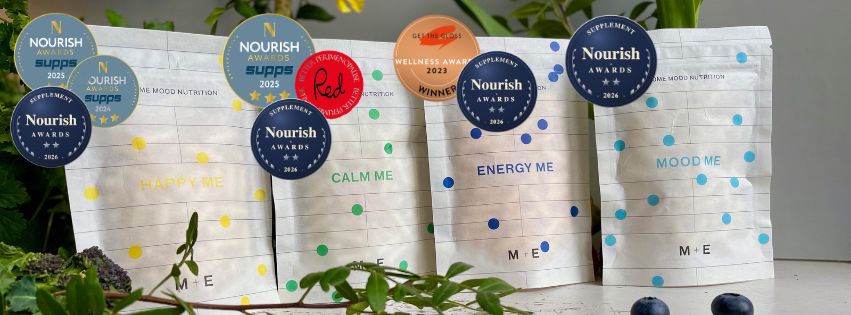
At M+E, each blend is formulated around a different kind of day:
-
Energy Me for flat, foggy, drained days
-
Happy Me for when you’re feeling low
-
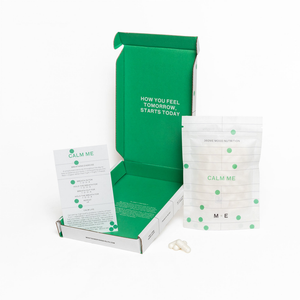
Calm Me for days of racing thoughts and unsettled nights
-
Mood Me for days when you’re feeling depleted and exhausted

Pair it with whatever small, nourishing thing you can manage, such as a proper breakfast, a piece of fruit, or a warm bowl of soup. Aim for a little, regularly, not perfection.

Next steps to taking the first turn
Step one: change the language you use
The first turn is the smallest one, and it costs nothing. It’s the words you use to describe where you are.
When we’re stuck, our language gets stuck too.
“I can’t.” “It’s always like this.” “I’m trapped.” “I’ll never change.”
These phrases feel like facts, but they’re really a story, and the brain tends to believe the story it hears the most. The more we repeat it, the more we look for evidence that it’s true, and the more stuck we feel.
You don’t have to pretend everything is fine, and I’m not asking you to swap the heavy feelings for relentless positivity. That doesn’t work and it can feel dismissive.
The aim is gentler than that: to loosen the grip of the story just enough to let some light in.
Look for the version of the sentence that is still true but leaves a door open.
-
“I’m stuck” becomes “I’m stuck right now, and I’m ready for something to shift.”
-
“I can’t do this” becomes “I can’t do all of this today, but I can do one small part.”
-
“I dread going to work” becomes “This isn’t working for me, and that tells me something I need to listen to.”
-
“I’m in the wrong relationship” becomes “I’m noticing that I'm not getting what I need, and that’s the first step towards communicating differently.”
-
“I’m struggling alone” becomes “I’ve been carrying this by myself, and I can give myself permission to let someone in.”
Notice what each of those does. They don’t deny how hard it is. They add a little potential, a little hope and a little opportunity, because even in a difficult place there is usually something to learn, something to change, or something to move towards.
Try it this week. Notice one sentence you say to yourself on repeat, and write down a gentler, truer version next to it. Then say the second one out loud.
It might feel awkward at first, and that’s fine. You’re not fixing anything yet, just turning slightly towards the light, and a spiral only needs one small turn to change direction.

Step two: live where your feet are
When we’re stuck, our minds are rarely in the present moment. We are in yesterday, replaying what we said, what went wrong, what we should have done. Or we are in tomorrow, rehearsing the dread of Monday’s meeting, the difficult conversation, or the winter ahead.
That’s exhausting, and it keeps the spiral turning. The past can’t be changed and the future hasn’t happened yet, but we spend so much energy in both that we have very little left for the only place we can actually act, which is here.
So the second small turn is to come back to where your feet are.
It doesn’t have to be a big practice or twenty minutes on a cushion. Try this:
-
Feel your feet. Wherever you are right now, notice them on the floor. Notice the pressure, the temperature, the ground holding you up.
-
Take one slow breath out. Make the exhale a little longer than the inhale. It gives your nervous system a gentle nudge towards calm.
-
Name what’s around you. Look for three things you can see, two you can hear, one you can feel. It takes about thirty seconds and brings your mind back into the room.
-
Ask one small question: “What’s one thing I can do right now?” Not this week, not this year, just right now.
Autumn makes this easy. Next time you’re out, walk slowly through the leaves and listen to the crunch. Notice the colour, the smell of the air, the light, the sound of the leaves in the tres. For those few minutes, you’re not stuck in anything. You’re simply here.
Living where your feet are doesn’t mean ignoring what’s hard. It means giving your mind a rest from the loop, so you can face what’s in front of you with a bit more clarity and a bit more energy.
Step three: rename it
Language doesn’t just describe our lives. It shapes them. The names we give things (our feelings, our situations, ourselves) quietly decide what feels possible.
When we’re stuck, we tend to hand out names that close doors. I’m a mess. I’m failing. I’m stuck. I’m just not a positive person.
Those names don’t feel like choices. They feel like facts about who we are.
But a word is only a label, and labels can be rewritten.
Rename the feeling.
Psychologists call it affect labelling: research suggests that putting a feeling into precise words can take some of the heat out of it.
“I feel awful” is a fog.
“I feel overwhelmed and a bit lonely” is something you can actually work with.
Try being more specific than “bad”.
Is it tired, anxious, flat, resentful, afraid, disappointed? Naming it accurately is the beginning of moving through it.
Rename the situation.
“I’m stuck” can become “I’m in a pause”, “I’m at a crossroads”, or “I’m in between chapters”.
It’s still honest, but each one carries movement and possibility. A pause ends. A crossroads has more than one road.
Rename your part in it.
This is where agency comes in. Listen for the words that make you passive: I have to. I should. I can’t. They make me. Now try swapping some of them:
-
“I have to go to work” becomes “I’m choosing to go in today, while I work out what I want next.”
-
“I should be coping better” becomes “I can be kinder to myself.”
-
“I can’t change anything” becomes “I can’t change all of it today, but I can change a small part.”
Agency doesn’t mean everything is your fault or that you can simply decide your way out of a hard situation. Some things really aren’t in your control.
It means noticing the small places where you still have a say, and reminding yourself that you do. Even a small “I choose” turns you from someone things happen to into someone who is steering, however gently.
Try this week: write down one name you’ve given yourself or your situation that closes a door, and write a new one beside it. Then use the new name out loud, at least once a day.
You’re not pretending, just remembering that you’re the author of the next line.
Build the foundations
So far, the turns have been about how we think and talk. This one is about the organ doing the thinking.
Your brain is the control room for how you feel, how you cope and how you show up.
When it’s well looked after, it’s like adding strong foundations to a house. You don’t see them, but everything built on top feels steadier. And when the foundations are neglected, the cracks tend to show up everywhere at once.
What stress does to your outlook
Stress isn’t just uncomfortable. It changes what we notice. When we’re under pressure and running on too little rest, the brain becomes more alert to threat and more likely to scan for what’s wrong. Small things feel bigger. Neutral comments sound critical. The positives slide past unnoticed. That’s a negative bias, and it’s not a character flaw. It’s a tired, stressed brain doing what brains do to keep us safe.
The good news is that the opposite is also true. Rest brings us back to a more balanced place. When the brain is properly nourished and rested, it’s better able to see the whole picture, both the hard parts and the good ones.

Start with one foundation, then build
You don’t have to rebuild everything all at once. Take it one step at a time.
Choose one:
-
Nourish it. One brain-friendly meal today: oily fish, leafy greens, beans, nuts and seeds, or colourful roasted veg. Nutrition is often the first thing to slip when we’re low, and it’s one of the quickest to put back.
-
Support it. Your brain uses vitamins, minerals and amino acids to do its work. This is where a supplement can be a helpful first domino, topping up what busy, stressed days don’t always provide.
-
At M+E, we’ve formulated each blend around a different kind of day. Energy Me is for flat, foggy days, Happy Me for low days, Calm Me for hypervigilant days and unsettled nights, and Mood Me is for days when you don’t feel like yourself.
-
Rest it. Pick one wind-down habit: screens off thirty minutes earlier, a warm drink, a few slow breaths, or lights low. Your brain is doing important work while you rest.
-
Light it. Ten minutes outside before midday. It helps set your body clock and is one of the simplest things you can do for sleep and energy.
Think of it as investing rather than fixing.
Small, regular deposits into your brain health add up, and the returns show up in your relationships with yourself and the people around you.

Start Your Upward Spiral
You don’t need to have it all worked out. You don’t need to feel completely ready, or motivated, or certain. You only need to notice where you are.
And choose.
To soften the words you use about yourself. To feed the brain that’s working so hard for you.
And take one small step. Then another.
It’s all in the decision to choose. A spiral only needs one small turn to change direction, and you can give yourself permission to make that turn today.
Here’s to letting go, making space, getting safe, and choosing your way up.
Keep taking care of yourself,
Evelyn
+ The M+E Team
A gentle note
If low days are stacking up, or things feel heavy for more than a couple of weeks, please talk to your GP or a mental health professional. Supplements and small habits are a great foundation, but they aren't a substitute for support. Food supplements shouldn't replace a balanced diet and healthy lifestyle.
As featured in this story

Written by Evelyn Montgomery

Leave a comment
This site is protected by hCaptcha and the hCaptcha Privacy Policy and Terms of Service apply.